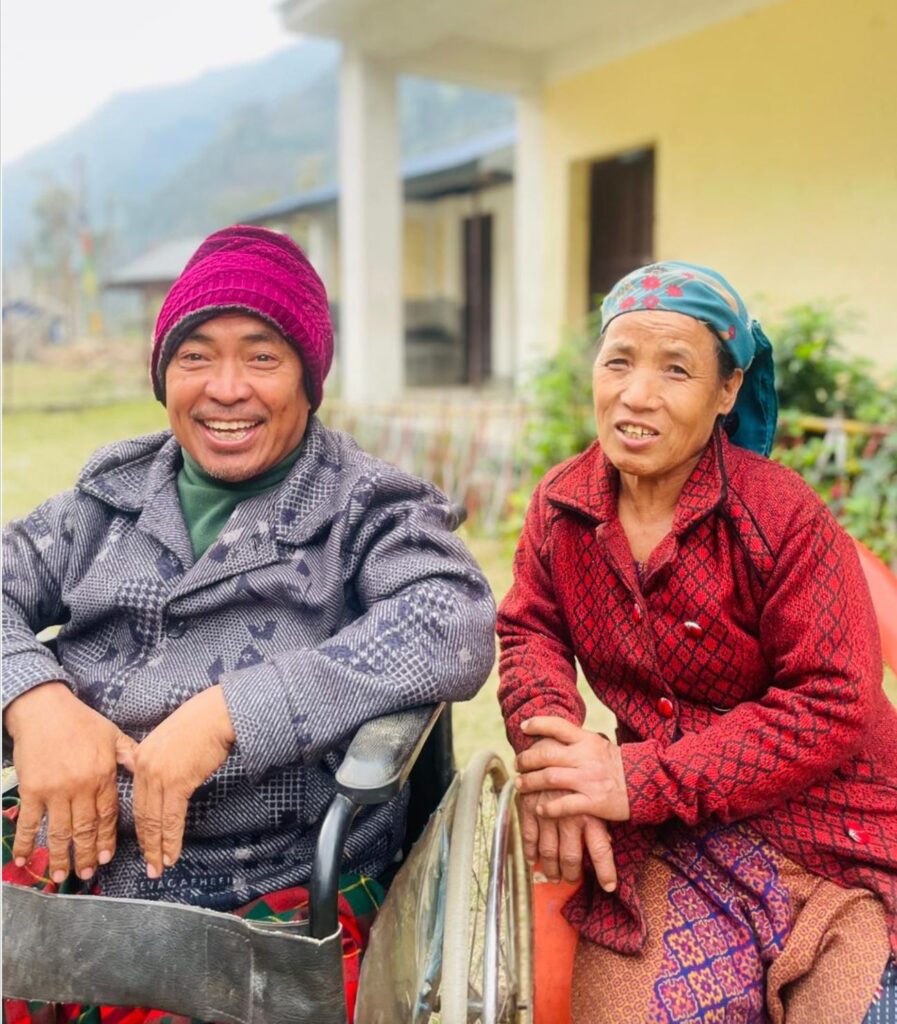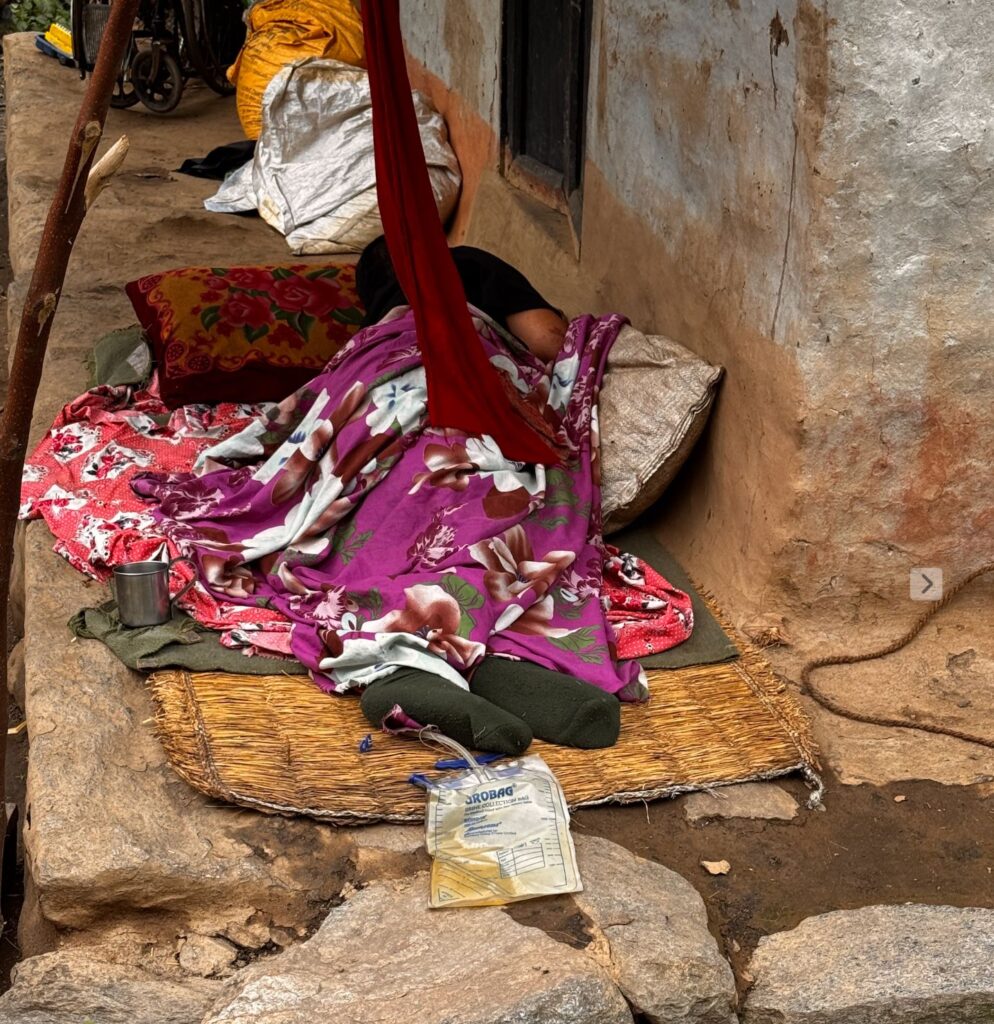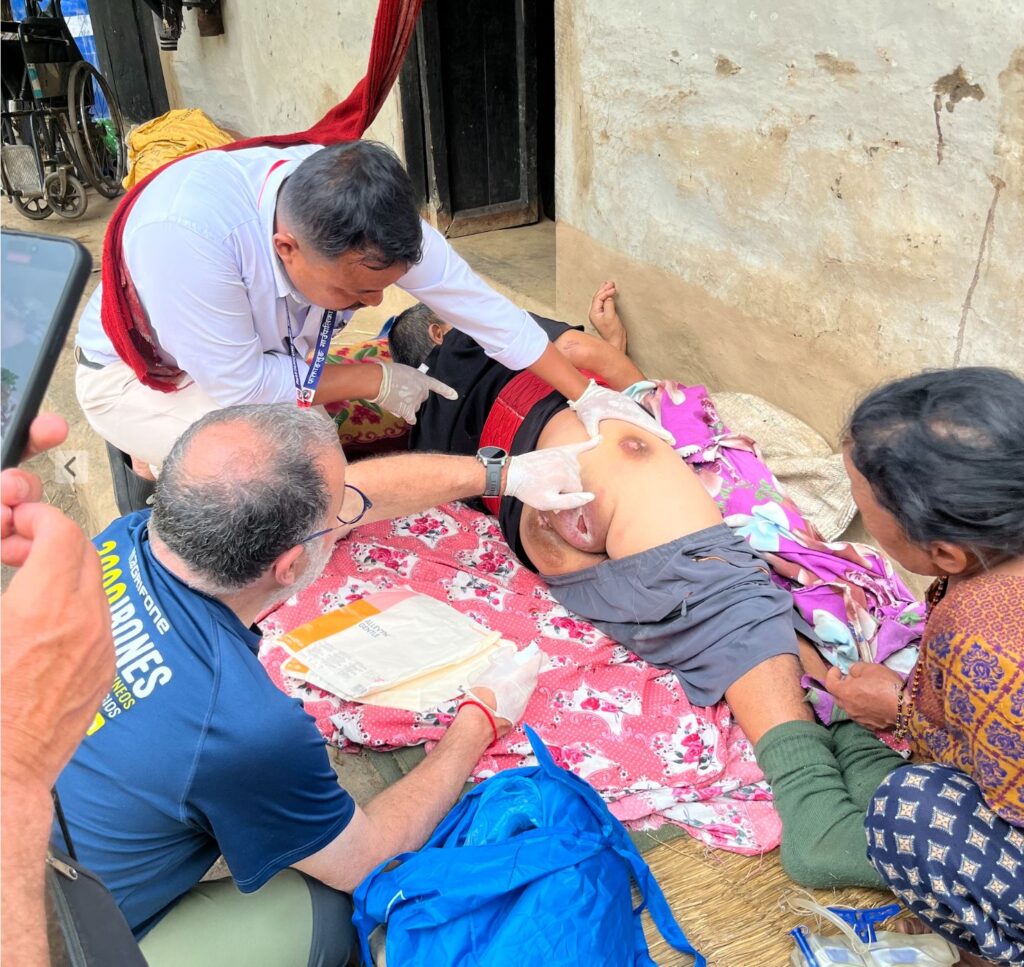
On 13 May 2025, we had our first contact with our patient in Nepal through Bisan. Santa, our first patient, is a paraplegic with a category IV pressure injury in the gluteal area.
This patient is in the Kanchenjunga-Jannu area, hence the name of our organisation. Sinwa is a four-hour drive from the regional capital, Taplejung, in the far east of Nepal.
After an initial assessment, we defined a preliminary care plan while waiting to obtain products for the care of this pressure ulcer.
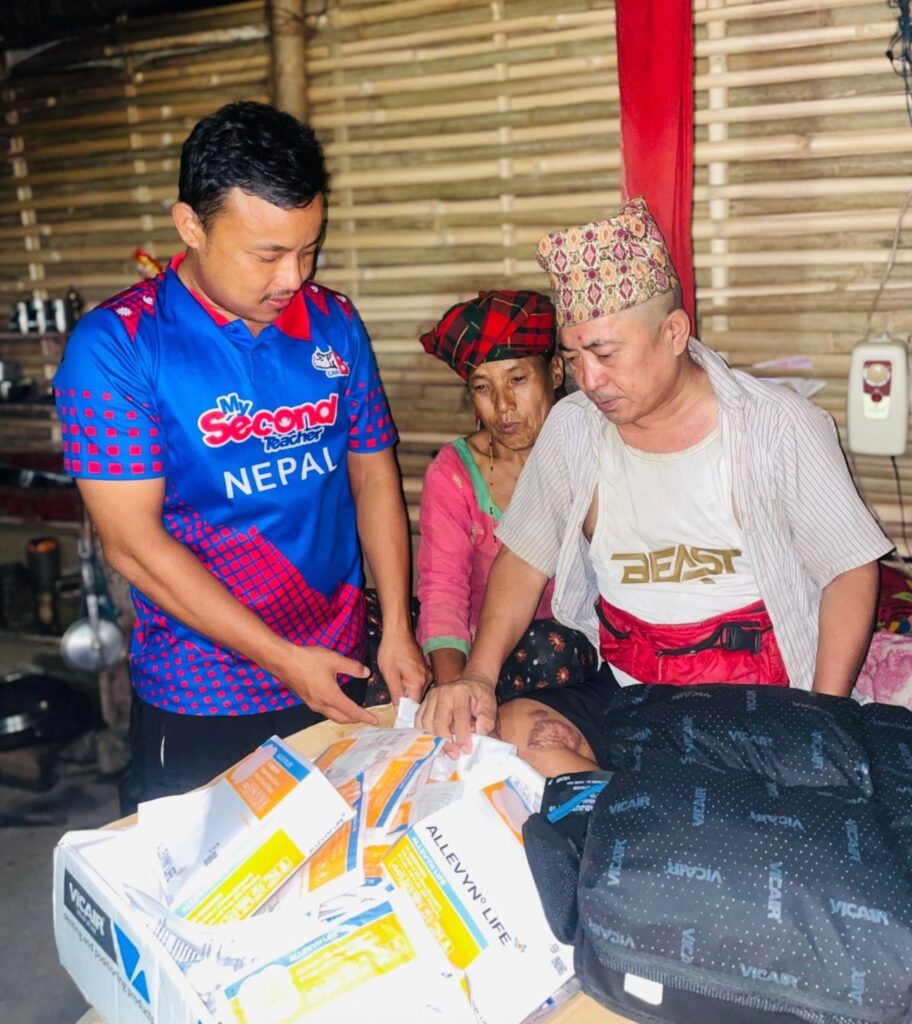
On 14 June, we obtained dressing materials (alginates, hydrofibres and multi-layer foam dressings) as well as hyperoxonised fatty acids in oil and barrier cream for the care of perilesional skin, healed injuries and to prevent incontinence injuries, and a cushion for the prevention of LPP and to improve the patient’s stability.
After many vicissitudes, and thanks to the help of Smith&Nephew Spain and our determination and enthusiasm and that of our local collaborator Nature Trek, the package with the materials arrived in Sinwa in September.
The patient is being treated by Bisan, a nursing technician at the local primary care centre, with the support of Jannu Ferides.
Currently, the pressure injury is improving, no new lesions have appeared, and we are waiting to send an alternating air mattress to improve preventive care.
Collaborating on this project are Jannu Ferides, Nature Explore Treks, Smith & Nephew Spain, Vermeiren Spain, Biotelier Labs, and Fheriwounds Solutions.
An Interesting fact:
The image we have included corresponds to the Silam Sakma, a symbol associated with the Limbu people, an indigenous group from the Himalayan region who are the majority in the Sinwa area.
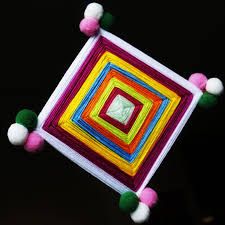
In terms of its meaning, “Si” means “death”, “lam” translates as “path” and “sakma” means “to stop”, so Silam Sakma is considered a protective shield that “stops the path of death”. There are various stories about the origins of the Silam Sakma. The story that has been passed down to Kumari’s family tells how the Silam Sakma began as a way for a young man to formally guide the spirit of his deceased mother out of the realm of the living and into the afterlife. Today, when the Silam Sakma is seen in a space, it indicates the presence of a Limbu person in that place.